

 With the start of the new zman, students across the world are returning to their learning institutions with many safety measures in place to prevent the transmission of COVID-19, Masks, hand sanitizer, plexiglass screens, quarantine, social distancing:
these protocols are being put in place to protect the community from Coronavirus and also to prevent the schools from being shut down by the government for non-compliance.
As frum Jews, however, we must remember that it wasn’t the virus or the government that caused the recent lockdown; it was HaKodesh Boruch Hu who divinely ordained the shut down of all Jewish institutions around the world. What did we do wrong that HaKodesh Boruch Hu closed us down? What תשובה do we need to do?
In previous articles, I argued that the Coronavirus is a wake-up call to all of us. If Hashem has closed down schools, maybe there is something we need to change in the system. Too many children are being lost each year to Yiddishkeit because of problems with the educational system. Just as we are willing to make very drastic changes to ensure the physical safety of our kids, minimize the spread of infection and avoid a government shutdown, so too, we need to put in place measures to ensure the spiritual safety of our kids, minimize the spread of dis-affection and avoid a further Divine shutdown. We have to enable every child, regardless of his or her ability, to find Simcha in Torah learning and enjoy their chinuch experience, so that no student will be left behind. Here are some suggestions for achieving this.
1) It is the responsibility of the school to teach Alef Bais in a manner that all children will identify the letters effortlessly and fluently. This skill has to be implemented primarily before studying Nikudos (vowels).
2) When teaching the letters and nikudos, this method should be taught according to our Mesorah, keeping it simple, using the methodology handed down through the generations. First, we teach the fluency of naming the letters, followed by “Kometz, Alef, Aa”.
Unfortunately, many children are being taught using phonic sounds and cute colorful pictures. This may appear to be the modern and more effective method of teaching, but this derech has seeped in from the non-Jewish approach. When using phonic sounds in place of identifying the actual letter, it will appear that the student is reading, but he is actually just sounding out the syllables within the word, not seeing the word itself. Eventually, he will struggle with translation and Rashi reading.
3) After the student has been taught the skill of reading Hebrew, he should receive periodical testing, checking that his accuracy and fluency level in school is maintained throughout his elementary years. Once the student is fluent in Hebrew reading, he may then proceed to learning Biblical Hebrew. If the student is not fluent, he will be struggling to read, reading in syllables, not in whole words, and will not be able to distinguish between the roots of the words, prefix or suffix.
4) When learning to translate, students must learn to translate clearly in their mother tongue. When an English translation is interspersed with many Yiddish or Yeshivish terms, students need to expend much extra brain energy to decipher such a linguistically complex mixture, usually resulting in lack of attention, loss of focus, and a lack of clarity comprehension.
The phenomenon arises because Rebbeim feel they are carrying on a Mesorah. Unfortunately, this is NOT our Mesorah. As we see from Moshe Rabbeinu, he gave over the Torah in 70 languages so that no one could say they didn’t understand the Torah. Torah must be taught in the language which the student understands. As I have seen, a student may burn out because he did not learn in his mother tongue. Even when it appears the student is reading and translating fluently in Yiddish, it does not mean he actually understands what he is saying.
5) When learning a text, a student should be able to read fluently, translate exactly, understand the context, and explain the sentence structure, whether it is Chumash or Gemara. He must learn how to add extra words to explain the sentences, since Chumash and Gemara are very concise, unlike English or any other language which can be understood right away. Consequently, this ability will enable the student to be able to learn on his own. If a student is unable to do this, it is a clear sign that the requisite skills for learning are not yet in place. The pressure to cover material should never come at the expense of fundamental skills which are most important for being able to enjoy learning and to learn independently beyond Yeshiva.
6) The student must be able to read fluently before starting Chumash. The minimum a student should know is the Chumshei Torah first before starting Mishnayos. Teaching Gemara should only start at the age of 15 and later as it is clearly stated in שולחן ערוך · אבן העזר · סימן א סעיף ג]
ג מִצְוָה עַל כָּל אָדָם שֶׁיִּשָּׂא אִשָּׁה (ג) בֶּן י”ח באר היטב (ג) בן י”ח. אע”ג דכל המצות חייב לקיים מיד כשנעשה הבן י”ג מ”מ מצוה זו קבלו חכמינו ז”ל שבן י”ח לחופה מאחר שצריך ללמוד קודם שישא אשה התחלת לימוד גמרא הוא מבן ט”ו ואילך
Institutions teaching Gemara to students before 15 years old are clearly going against halacha as the באר היטב wrote. All those institutions that teach Gemara under the age of 15 years old should consider stopping this practice.
Before commencing Gemara, the minimum should be knowing all the Mesechtas of Mishnayos which are required for the Yeshiva system, plus Nach inside until Melachim.
7) It is crucial that Rebbeim should use consistent pronunciation throughout the school system. I have met many talmidim over the years whose learning suffered because of the confusion generated by inconsistencies in pronunciation.
8) Children should not be pressured to absorb more than they are capable of at their specific age. Concerning homework, I would like to quote my Rebbi, Rav Mattisyahu Salomon, who advocates a no-homework policy. “School should be the place to learn and the home should be a place of refuge and time with the family.” (With Hearts Full of Love, Artscroll/Mesorah. P. 79-83). Any institution which does not follow his words ” no homework policy” is going against daas Torah and should be shut down.
9) Medicating a student is the last resort, and never addresses underlying causes of academic issues. It is a crutch used by many institutions to eliminate extra expenses of remediation and hence behavioral issues. A senior Rosh HaYeshiva confided to me that, in their community, medication has been used for over 3 generations. From my experience, I have seen that children who are unfocused in class and labeled ADD/ADHD, most probably have underdeveloped academic skills that have not been diagnosed, which will ultimately create disinterest in the classroom, leading to a lack of understanding of the material presented by the teacher. Other factors that could present as ADD/ADHD are sleep deprivation, too much junk food (white sugar, processed foods, etc.), skipping breakfast, lack of exercise to name a few.
10) Educators must consider the possibility that an unsuccessful child might be a victim of some sort of abuse ( physical, mental, emotional ) which is, unfortunately, a growing problem in our communities.
11) All educators in frum schools/yeshivas including Rabbeim and Menahelim should be required to enroll in some form of kiruv program before starting classroom placements to learn how to transmit Torah teachings and values with Simcha and positivity.
12) Communication and respect between parents and the Hanhala are crucial. Whilst the educator has the premier responsibility of the child’s education during school, a parent’s requests should be taken into consideration.
13) Jewish hashkafa should be emphasized in school. Hashkafa provides the grounding of how a Yid should live and serve HaKodesh Boruch Hu properly and that He loves all of us. It should be noted that children can not be expected to accept everything they hear from the Rebbe without being allowed to ask questions. Questions are a natural way that children learn and clarify concepts. Children should not be made to feel that they are questioning the validity of the Torah chas v’shalom.
14) As in my previous articles, I advocate never to expel a student from an institution without having a plan B put in place. A child simply rejected from the Yeshiva system will feel anger and resentment towards Hashem and this is very dangerous. If the Menahel feels the child would be better suited for a different type of institution, it is his responsibility to find the child a suitable alternative and to explain to the child how it would be to his benefit. This way, the child can feel he has options and can make a choice that is in his best interests. If the child refuses to leave, then Menahel needs to seek advice on how to deal with him. HaRav Steinman זצ“ל gave a rebuke to a Menahel when asked if a Menahel should accept a certain child whom he felt was not “their type” for his school. He answered back that this philosophy was merely Gaava and that all children should be accepted.
15) Never punish a student by writing out a Gemara as retribution for not following the place. I have worked with many adults who, till this day, wont learn certain Gemaras, since they had been administered that Masechta as a punishment as a child. It should go without saying that there is no place for hitting the student or throwing him out of the classroom.
16) Tefilla is crucial. A student must learn the translation and understand what he is saying, to prevent davening from becoming boring and meaningless.
17) The Rebbe is the key in making a student’s experience in school the most memorable and uplifting experience. Parnasa should never be the criteria for keeping a poor Mechanech employed in a school or Yeshiva if it means putting children at risk.
18) All children/bochurim or girls should never be refused acceptance or put on trial for the month to see if he/she“fits in” to which every Jewish institution they apply too. Let us remember Hitler, may his name be blotted out, who murdered 2 million Jewish children in the Holocaust, and we cannot let that happen again. By refusing with excuses such as “we are too full” or “the child does not fit into our mold” or “we do not have the resources to help your son/daughter”, institutions invariably find money for what they need.
As we prepare for the new school year with COVID-19 safety protocols in place, let us also remember these spiritual safety strategies to ensure our children stay focused and motivated and learn with Simcha.
This will drastically reduce the risk of disaffection and defection.
———————————-
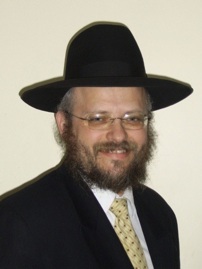
Rabbi Dovid Abenson can be contacted at: Tel. 15147393629. Cell/Whatsapp 15149935300. Email: [email protected]
Rabbi Abenson is the founder and director of ShaarHatalmud, a unique yeshivah-based online program, which incorporates learning all Kodesh subjects, from Kriah all the way up to learning Gemara, Rishonim, and Shulchan Aruch. He also conducts evaluations, remediation, and training, and consults with Roshei HaYeshiva and Menahelim to improve students’ underdeveloped learning and textual skills.